Our practice has its roots in a 2,500-year long tradition tracing back to Shakyamuni Buddha in India and passing through Bodhidharma, who transmitted it to China, and Dōgen Zenji, who brought it to Japan and founded the Sōtō School of Zen Buddhism. In the second half of the 20th century, Master Taisen Deshimaru planted the seed of our school in France, from where it spread all over Europe.
mokuho guy mercier
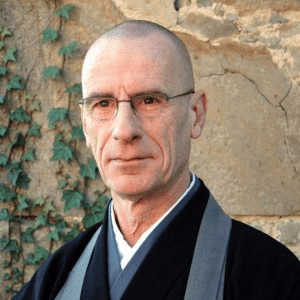
Mokuho Guy Mercier is the Referent for Newcastle Zen Group. He began practicing zazen in 1973 with Master Taisen Deshimaru and became his disciple following monk ordination in 1976. He has long been active in the French and European sangha, and is currently the abbot of La Gendronnière temple near Blois, France. He received dharma transmission from Sojun Matsuno Roshi in Japan in 2008. He regularly comes to the UK to lead sesshin (intense practice periods) and zen weekends.
taisen deshimaru
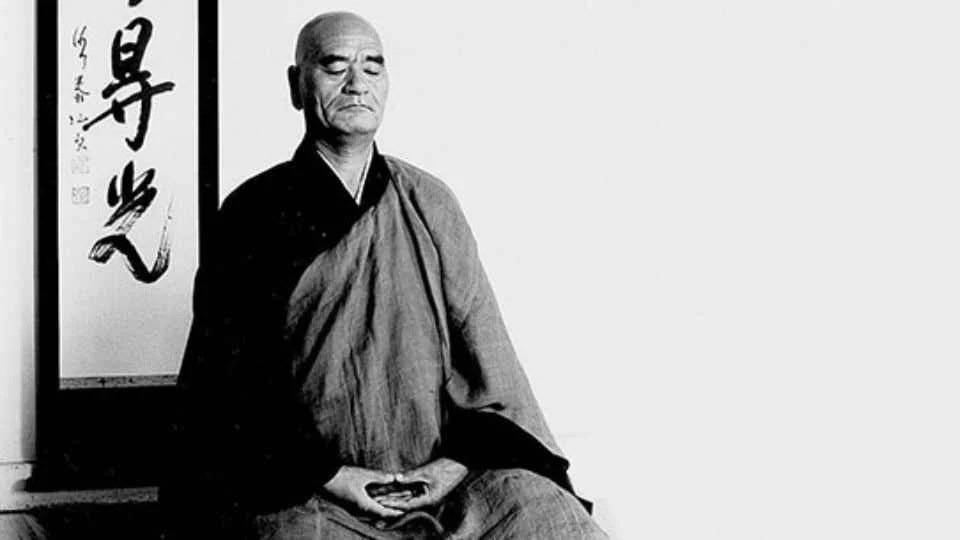
Born in Saga Prefecture, Japan, in 1914, Deshimaru studied economics and worked in industry before, during and after the Second World War. As a lay practitioner, he studied under Kōdō Sawaki (see below) for many years, and was eventually tasked by Sawaki on his deathbed with spreading Zen in Europe. Deshimaru arrived in Paris in 1967, where he began to teach practical zazen to people who mainly knew Zen from books. Deshimaru was a formidable teacher, whose efforts spread Zen across Europe. He died of cancer in Tokyo in 1982 and a portion of his ashes are interred at La Gendronnière in France, the temple he founded in 1980. For Deshimaru, Zen was grounded in practical experience. He said:
“[Zen] is always modern, always alive, making itself over again every instant. Zen is not reasoning or theory or ideas. Not knowledge to grasp with the mind. It is only practice, and that practice is zazen, right meditation, right sitting”.
kōdō sawaki
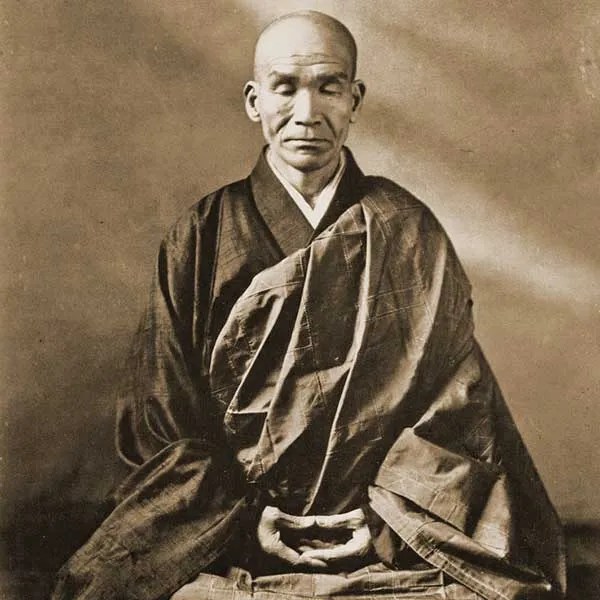
Master Deshimaru’s teacher was Kōdō Sawaki, one of the most influential zen masters and teachers of the twentieth century. Born in 1880, Sawaki survived a difficult childhood and became a monk before enlisting during the Russo-Japanese war. After the war he resumed his training, becoming a zen teacher and eventually professor at Komazawa university. Known as “homeless Kōdō”, he travelled extensively throughout Japan, teaching the importance of zazen. In 1949 he became responsible for Antaiji, a temple in Kyoto, where he died in 1965. Like his pupil, Sawaki emphasised the importance of Zazen together with the attitude of mushotoku (no gain). He said:
“What’s zazen good for? Absolutely nothing! This ‘good for nothing’ has got to sink into your flesh and bones until you’re truly practicing what’s good for nothing. Until then, your zazen is really good for nothing.”

